
- 138lessons
- 5guided projects
- 15module checkpoints
- 5.5hours of video
What you'll learn
- Write, trace and debug short Python programs using variables, strings, conditions and loops.
- Model data with lists, tuples, sets and dictionaries, and structure code with functions, classes and modules.
- Handle errors, read and write text, CSV and JSON files, and consume a JSON API with fallback behaviour.
- Plan, build, test and demonstrate a persistent application for trainer review.
Skills you'll gain
- Variables
- Data Types
- Operators
- Strings
- User Input
- Conditions
- Decision Making
- Loops
- Iterations
- Lists
- Tuples
- Sets
- Dictionaries
- Functions
Tools you'll use
- Python
- In-browser LMS Python runner
- CSV and JSON files
- JSON APIs
Details to know
- Certificate on completionIssued after your final project is reviewed
- 15 module checkpointsA quiz and a practical task close each module
- Self-pacedStudy any time; your progress is saved
- Beginner levelSee what you need before you start, above
How every lesson works
Each lesson follows the same four steps, so you always know what comes next.
- 01
Watch & Learn
A short animated video explains one idea at a time.
- 02
Guided Practice
Work through an example step by step and check the result.
- 03
Quiz & Challenge
Short questions check the idea has landed before you move on.
- 04
Mini Project
Build something useful from a project brief.
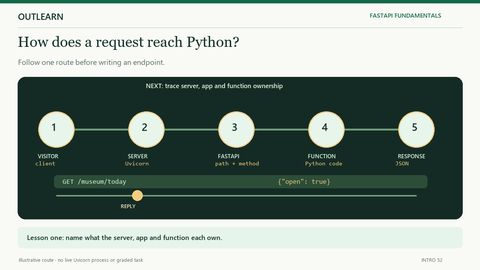
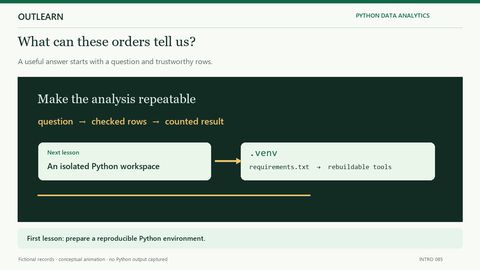
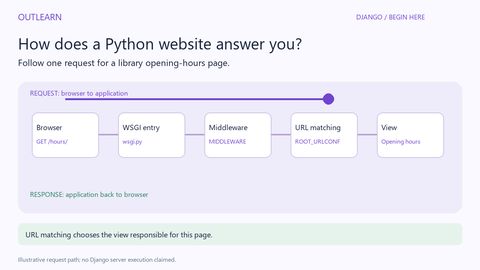
Frames from this course's video lessons
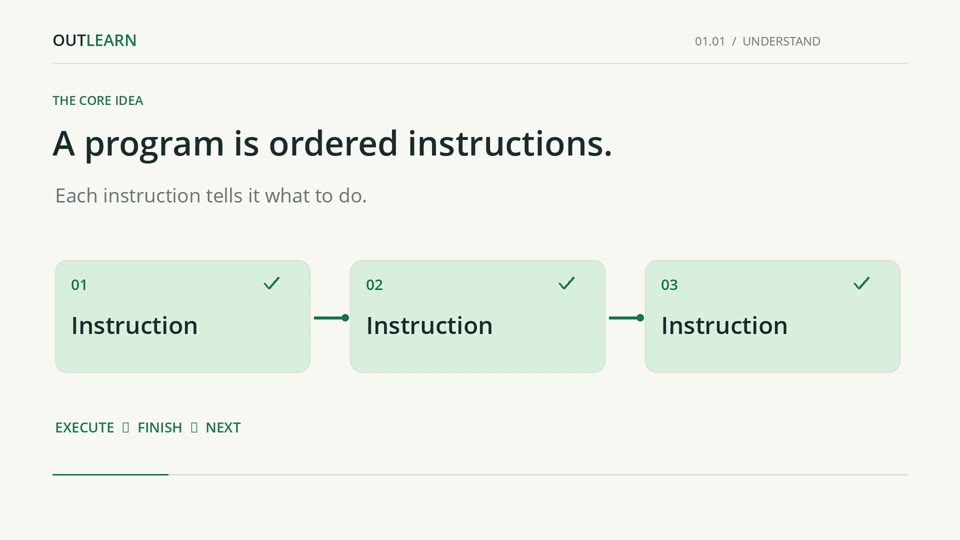
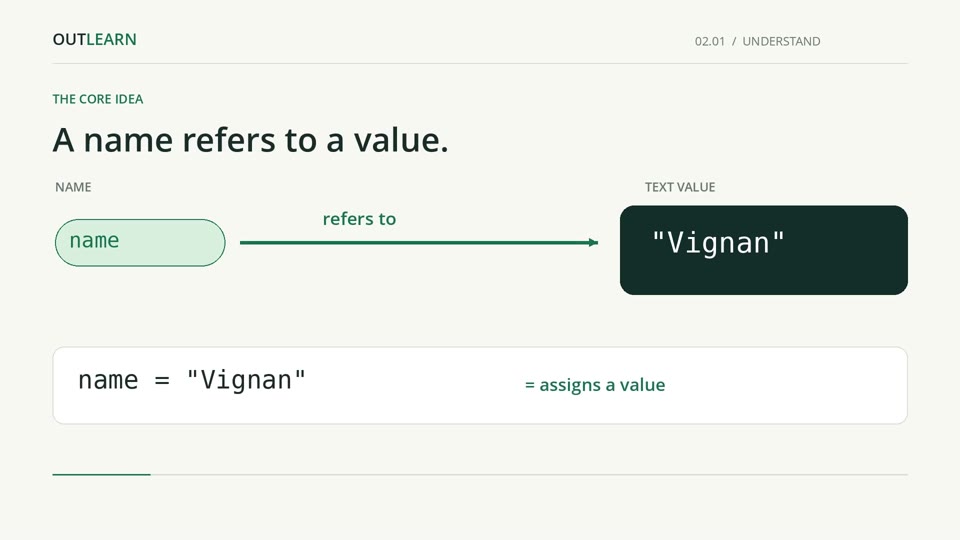
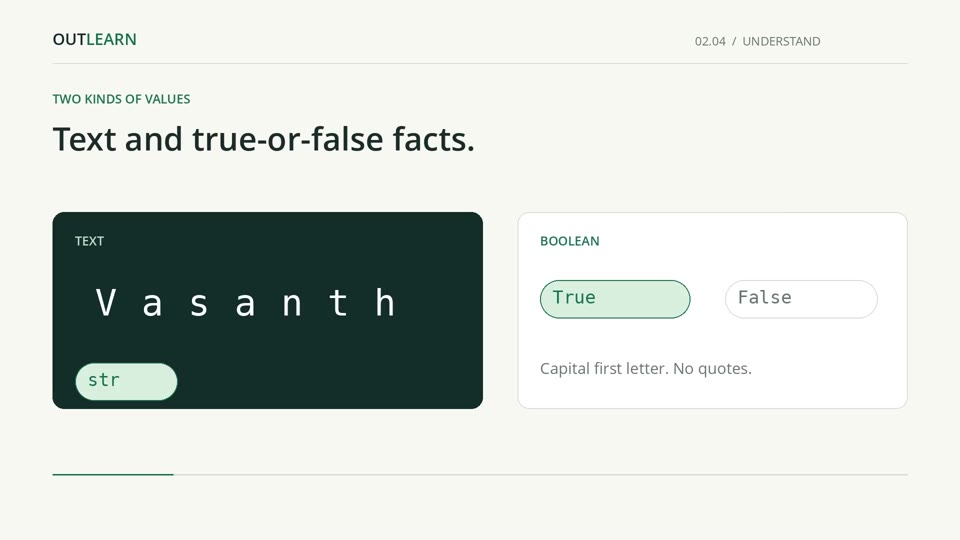
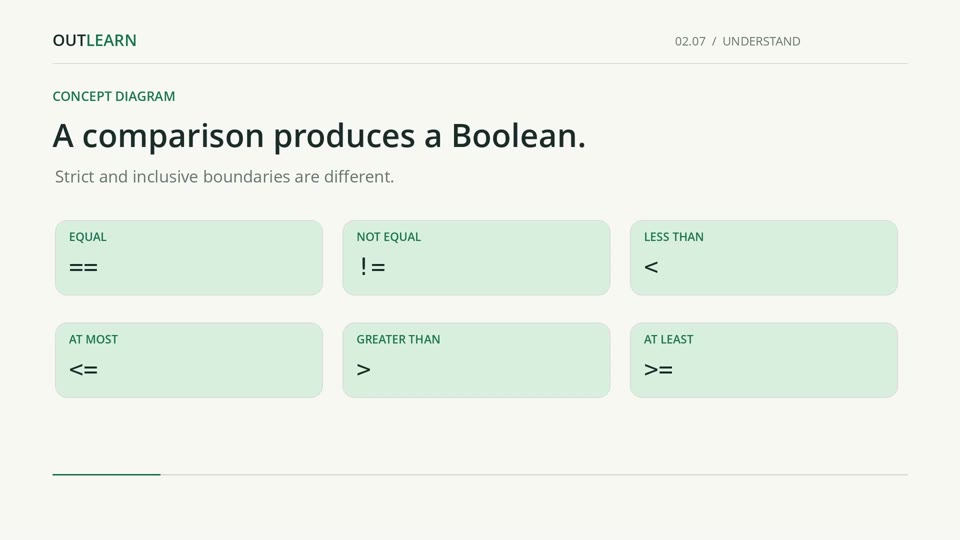
Learn at your own pace
This is a self-paced course. There are no live classes and no fixed timetable.
- Start any timeStudy when it suits you. Lessons are short, so they fit around work or college.
- Pick up where you left offYour progress is saved to your account.
- Ask when you're stuckUse Ask Mentor inside the learning platform.
Your path in 4 phases
Each phase ends with something you have built and checked.
- 01
Modules 1 to 5
Learn the basics
Start programming in Python with variables, operators, strings, input, conditions and loops.
You build: Short programs you trace and debug in the browser runner.
- 02
Modules 6 to 8
Organise data and code
Use lists, tuples, sets and dictionaries, write reusable functions, and handle errors.
You build: Student Grade Calculator (after module 7) and Personal Expense Tracker (after module 8).
- 03
Modules 9 to 12
Work with files, objects and libraries
Read and write files, CSV and JSON, use classes, modules and packages, and call APIs for external data.
You build: Contact Book (after module 9) and File-Based Task Manager (after module 10).
- 04
Modules 13 to 15
Automate and deliver
Write practical automation scripts, solve real-world problems and complete the final project.
You build: Inventory Management Application (after module 14) and the final project.
Full curriculum
15 modules and 138 lessons, 57 to 97 hours of study
01Introduction to Python & Programming8 lessons, 3 to 5 hours
Lessons
- What Is Programming?
- What Is Python?
- How Python Executes Code
- Your First Python Program
- Understanding Syntax
- Comments & Readability
- Common Errors
- First Coding Challenge
After this module you can
- Describe a program as ordered instructions and distinguish instructions from their output.
- Recognise Python source, the interpreter and practical uses of Python.
- Combine ordered print statements into a small information display.
02Variables, Data Types & Operators10 lessons, 4 to 6 hours
Lessons
- Understanding Variables
- Creating and Naming Variables
- Numbers and Numeric Data Types
- Strings and Boolean Values
- Type Conversion
- Arithmetic Operators
- Comparison Operators
- Logical Operators
- Assignment Operators and Expressions
- Practical Variable and Calculator Challenge
After this module you can
- Assign a value, read it back and explain reassignment.
- Choose valid descriptive names and distinguish case-sensitive identifiers.
- Build an item-total calculation that responds to changing inputs.
03Strings & User Input8 lessons, 3 to 5 hours
Lessons
- String Literals and Escapes
- Joining and Repeating Text
- Indexing and Slicing Strings
- Useful String Methods
- Formatted Strings
- Reading User Input
- Converting Input for Calculations
- Build a Personal Information Card
After this module you can
- Represent quotes, newlines and backslashes correctly in text.
- Combine text with concatenation and repetition.
- Combine cleaned user inputs and formatting into a reusable display.
04Conditions & Decision Making9 lessons, 3 to 6 hours
Lessons
- Boolean Conditions
- Making Decisions with if
- Choosing with if and else
- Multiple Choices with elif
- Combining Conditions
- Nested Decisions
- Membership and Truthiness
- Conditional Expressions
- Build an Eligibility Checker
After this module you can
- Predict truth values and use comparisons in decisions.
- Execute a block only when its condition is true.
- Implement boundaries and alternatives in a practical eligibility feature.
05Loops & Iterations10 lessons, 4 to 6 hours
Lessons
- Why Programs Repeat
- Iterating with for
- Counting with range
- Accumulating Totals
- Repeating with while
- Stopping with break
- Skipping with continue
- Nested Loops
- Loop Boundaries and Debugging
- Build an Expense Summarizer
After this module you can
- Identify repeated work and separate the repeated action from changing data.
- Process each value in a sequence with a for loop.
- Aggregate and filter expenses with a terminating loop.
06Lists, Tuples, Sets & Dictionaries12 lessons, 4 to 7 hours
Lessons
- Creating and Reading Lists
- Updating and Extending Lists
- Removing and Searching List Items
- List Slicing and Copying
- Sorting and Aggregating Lists
- List Comprehensions
- Tuples and Unpacking
- Sets and Unique Values
- Set Operations
- Dictionary Keys and Values
- Nested Collections
- Build a Shopping List Manager
After this module you can
- Store ordered items and access list values by index.
- Change, append and insert list items.
- Combine collection operations to maintain useful shopping records.
07Functions & Reusable Programming10 lessons, 3 to 6 hours
Lessons
- Defining and Calling Functions
- Parameters and Arguments
- Returning Results
- Default and Keyword Arguments
- Local and Global Scope
- Multiple Return Values
- Docstrings and Function Contracts
- Small Functions and Composition
- Lambda and Sorting Keys
- Build a Reusable Calculator
After this module you can
- Extract repeated work into a named function and call it.
- Pass different inputs into a reusable function.
- Design independently testable calculator functions.
08Error Handling & Debugging8 lessons, 3 to 5 hours
Lessons
- Reading Tracebacks
- Handling Errors with try and except
- Validating User Data
- else and finally in Error Handling
- Raising Helpful Exceptions
- Debugging with Evidence
- Assertions and Small Tests
- Build a Robust Grade Calculator
After this module you can
- Locate the failing line and identify an exception type.
- Recover from a known error using a specific exception handler.
- Calculate grades while handling invalid and boundary scores.
09File Handling, CSV & JSON8 lessons, 3 to 4 hours
Lessons
- Files and Paths
- Reading Text Files
- Writing and Appending Text
- Working with Lines
- Handling Missing Files
- Reading and Writing CSV
- Saving and Loading JSON
- Build a File-Based Task Manager
After this module you can
- Identify relative paths and distinguish file content from a filename.
- Read text safely using a context manager and explicit encoding.
- Persist structured tasks and restore them across runs.
10Object-Oriented Programming12 lessons, 4 to 7 hours
Lessons
- Objects and Classes
- Defining a Class
- Initialising with __init__
- Instance Attributes and self
- Methods and Object Behaviour
- Class and Instance Attributes
- Properties and Validation
- Readable Object Representations
- Inheritance Fundamentals
- Overriding and super
- Composition over Complexity
- Build an Inventory Item Model
After this module you can
- Describe a class as a definition and an object as an instance.
- Create a small class and instantiate it.
- Represent inventory items with validated stock-changing methods.
11Modules, Packages & Libraries8 lessons, 3 to 5 hours
Lessons
- Importing Standard Library Modules
- Selective Imports and Aliases
- Creating Your Own Module
- The Main Guard
- Dates and Times
- Math, Statistics and Randomness
- Packages and Dependency Planning
- Build a Modular Utility Toolkit
After this module you can
- Import a module and call its public functionality.
- Choose clear import styles and avoid naming collisions.
- Combine small modules with an intentional entry point.
12APIs & Working with External Data8 lessons, 3 to 5 hours
Lessons
- What Is an API?
- HTTP Methods and Status Codes
- JSON API Responses
- Query Parameters and URLs
- Making an Async Web Request
- Handling API Failures
- API Keys and Responsible Use
- Build a Weather Data Viewer
After this module you can
- Describe requests and responses as a contract between programs.
- Distinguish successful and failed responses and common HTTP methods.
- Transform weather response data into a useful display with fallback behaviour.
13Python Automation & Practical Scripts10 lessons, 4 to 6 hours
Lessons
- Planning an Automation Workflow
- Working with pathlib
- Batch File Processing
- Safe Renaming and Dry Runs
- Cleaning Tabular Data
- Generating Reports
- Logging Useful Events
- Configuration and Environment
- Idempotent and Repeatable Scripts
- Build an Expense Reporting Script
After this module you can
- Define inputs, transformations and outputs before automating a task.
- Inspect and construct file paths using pathlib.
- Combine cleaning, aggregation and output into a repeatable report.
14Problem Solving & Real-World Applications10 lessons, 4 to 6 hours
Lessons
- Decomposing a Problem
- Designing Data Models
- Searching and Filtering Records
- Sorting and Ranking Results
- Boundary and Edge Cases
- Measuring Basic Efficiency
- Build a Contact Book
- Build a Personal Expense Tracker
- Build an Inventory Management Application
- Refactoring and Application Tests
After this module you can
- Split a broad requirement into clear, testable operations.
- Choose record fields and data structures to match requirements.
- Improve structure while preserving verified behaviour.
15Final Project & Skill Assessment7 lessons, 3 to 4 hours
Lessons
- Choose and Scope Your Final Project
- Plan the Application Architecture
- Implement the Core Features
- Add Persistence and Error Handling
- Test and Improve Your Application
- Prepare a Project Demonstration
- Final Skills Review and Submission
After this module you can
- Choose an approved project and define a comparable set of features.
- Separate storage, validation and application operations.
- Submit source and walkthrough evidence for trainer evaluation.
What you'll build
5 guided projects along the way, then a final project.
Student Grade Calculator
after module 7Personal Expense Tracker
after module 8Contact Book
after module 9File-Based Task Manager
after module 10Inventory Management Application
after module 14
Final project
Choose one final project: a persistent task application, a persistent inventory application or a persistent expense application.
What you submit
A working application with source, functional tests, expected-error handling, persistence and a trainer-reviewed demonstration.
How it's reviewed
Trainer review of the module 15 assessment and final project demonstration under the existing review rubric.
Try the first lesson
What Is Programming?
You give Python two instructions and see that their order determines what appears first.
Your turn. Predict the output, then change the second message and predict the result again.
print("Open the notebook")
print("Write an idea")
Where you'll use it
- Write a script that reads a CSV export, totals values by category and saves the result as JSON.
- Call a JSON API from Python and fall back to a sensible message when the request fails.
Roles that use these skills
- Python developer (junior)
- Automation scripter
- Data operations assistant
Earn the certificate by building, not watching
- Complete the lessons and pass each module checkpoint.
- Build your final project and demonstrate it.
- OUTLEARN reviews your project and issues your certificate. It is not issued automatically.
Frequently asked questions
Do I need to install Python?
No. Lessons use the in-browser LMS Python runner; local installation is not required or taught.
Do I need any programming experience?
No prior programming language is assumed.
Which final projects can I choose?
A persistent task, inventory or expense application.
Be first in when Python Programming opens
Email us and we will tell you as soon as enrolment opens.
Notify me when it opens